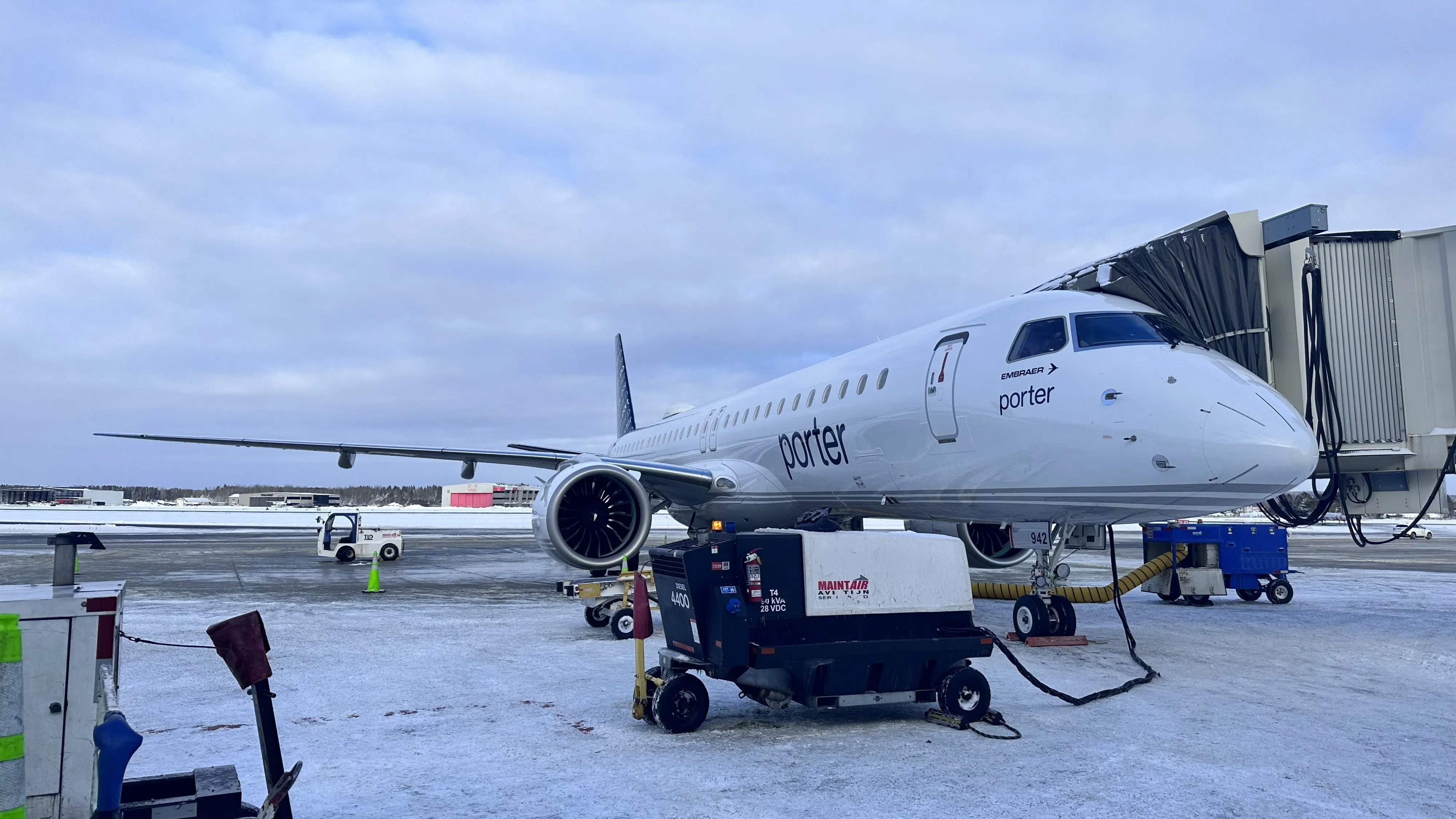
Halifax and Thunder Bay flight crews with Porter Airlines are weighing the difficult decision of whether to continue working for the airline from their home communities, following a decision by the company to close crew bases in the two cities.
In a statement, the airline explained that “Porter is in the middle of a transformative growth plan, and our network is very different than it once was.”
Porter plans to consolidate their crews into their bases in Toronto and Ottawa, which the airline describes as “the most effective way to organize crew and operate flights.”
The Canadian Union of Public Employees (CUPE) Local 4061, which represents Porter cabin crews, says the closures will affect 26 crew members in Thunder Bay and 30 in Halifax.
CUPE Local 4061 President Sarah Seal says the crews were disappointed and saddened by the news of the base closures.
“These flight attendants have been around for a really long time… They love their jobs and the work they do. So it’s been very difficult for them and their families in the last week.”
Older staff and those with more than 15 years of experience may be able to pursue early retirement, but the rest will have to decide if they wish to stay in Halifax and Thunder Bay or move to Toronto and Ottawa.
Porter says that “in most cases, we expect team members to continue living in their current communities while their work base changes.”
But Seal says working out of Halifax or Thunder Bay and commuting into Toronto or Ottawa will be hard on the workers.
“Commuting is kind of different for the flight attendant world. You’re not hopping in a car and driving to the office. You hop in your car, drive to the airport, then you’re going to get on a flight if there’s a seat for you. And then you fly across the country to get to work,” she explains. “So for every time you have to go to work, you have to do that. There’s added costs, there’s added time.”
Seal points out that unpaid hours, such as for long commutes, are currently a big issue for flight attendants — the issue was also a sticking point during last summer’s Air Canada strike.
Flight crews also may have to cover some costs of the commute themselves, which Seal says could come out to about $60 per round trip.
With potentially hours of unpaid commuting time for the Halifax and Thunder Bay crews to wrestle with, Seal hopes her local CUPE branch can negotiate with Porter, making the choice of whether to move easier.
“We’re looking to improve the commuting policy and other things like that to make this more feasible for them, because we want to support whatever choice they choose,” she says. “We live where we live because we love our communities, right? It’s really difficult to be forced to make this decision. There is no winning solution for these impacted members.”










Comments