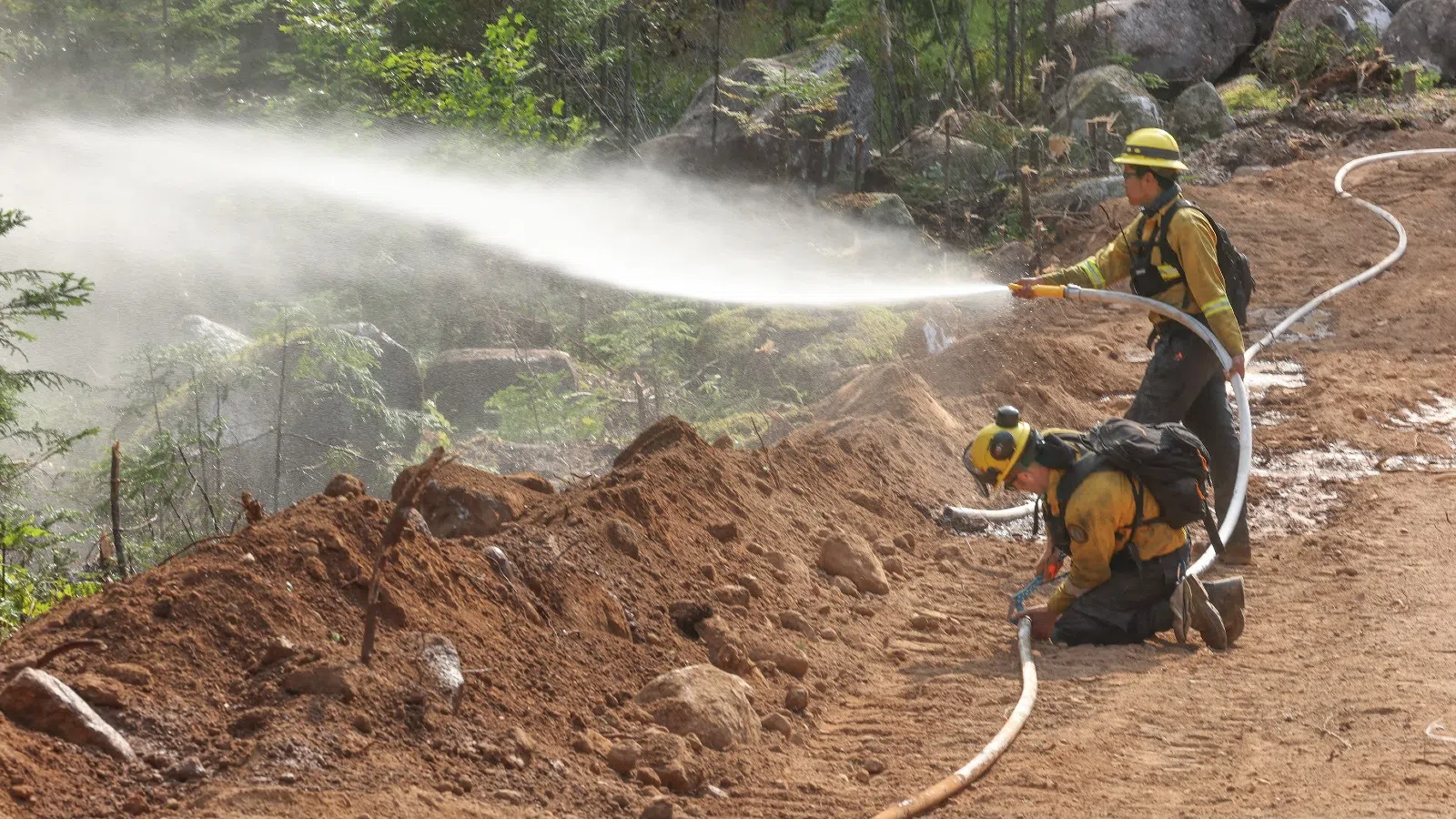
Firefighters and equipment team up to clear ground and slow the Long Lake wildfire’s spread. Image: Nova Scotia Gov. X media post.
Nova Scotia is heading into wildfire season with improved moisture levels compared to last fall — but officials say the weeks ahead remain a critical period for fire risk.
Scott Tingley, manager of Forest Protection with the Department of Natural Resources, says winter snow and rain helped offset dry conditions that developed late last year.
“The snow and rain were certainly welcome over the winter — we needed it,” Tingley said. “We went through the fall in a significant rainfall deficit.”
However, he says that benefit begins to fade as temperatures rise and snow cover disappears.
“As that snow starts to disappear, the risk does start to increase,” he said. “One of our biggest risk periods is this time of year before things green up.”
That “spring risk period” typically lasts until late May or early June, when vegetation begins to green up and moisture levels improve.
In the meantime, open areas across the province are already drying out, with brown grass and snow-free ground increasing the potential for fires.
The wildfire season officially began March 15, and daily burn restrictions are now in place. Residents are required to check conditions each day before burning, with updates posted at 2 p.m.
Tingley says what happens over the next several weeks will play a major role in how severe the season becomes.
“What happens over the next six to eight weeks with rainfall really affects what our risk profile is going to be,” he said.
Alongside the seasonal outlook, the province is also expanding its firefighting capacity.
A new contract will see fixed-wing water bombers stationed in Nova Scotia from May through September, supplementing the province’s existing helicopter fleet.
“Having them pre-positioned in Nova Scotia certainly helps our readiness,” Tingley said. “It’s an enhancement to our program.”
The aircraft were previously available through mutual aid agreements, but having them based in-province is expected to improve response times.
The province has also expanded training and equipment following recent wildfire seasons, including additional tools for structure protection.
Despite those improvements, officials continue to stress that most wildfires in Nova Scotia are caused by human activity.
“The vast majority of fires in Nova Scotia are caused by people,” Tingley said. “Everyone has a role to play.”
Residents are being reminded to follow burn restrictions and take steps to reduce fire risk around their homes as the season ramps up.
I am text block. Click edit button to change this text. Lorem ipsum dolor sit amet, consectetur adipiscing elit. Ut elit tellus, luctus nec ullamcorper mattis, pulvinar dapibus leo.






Comments