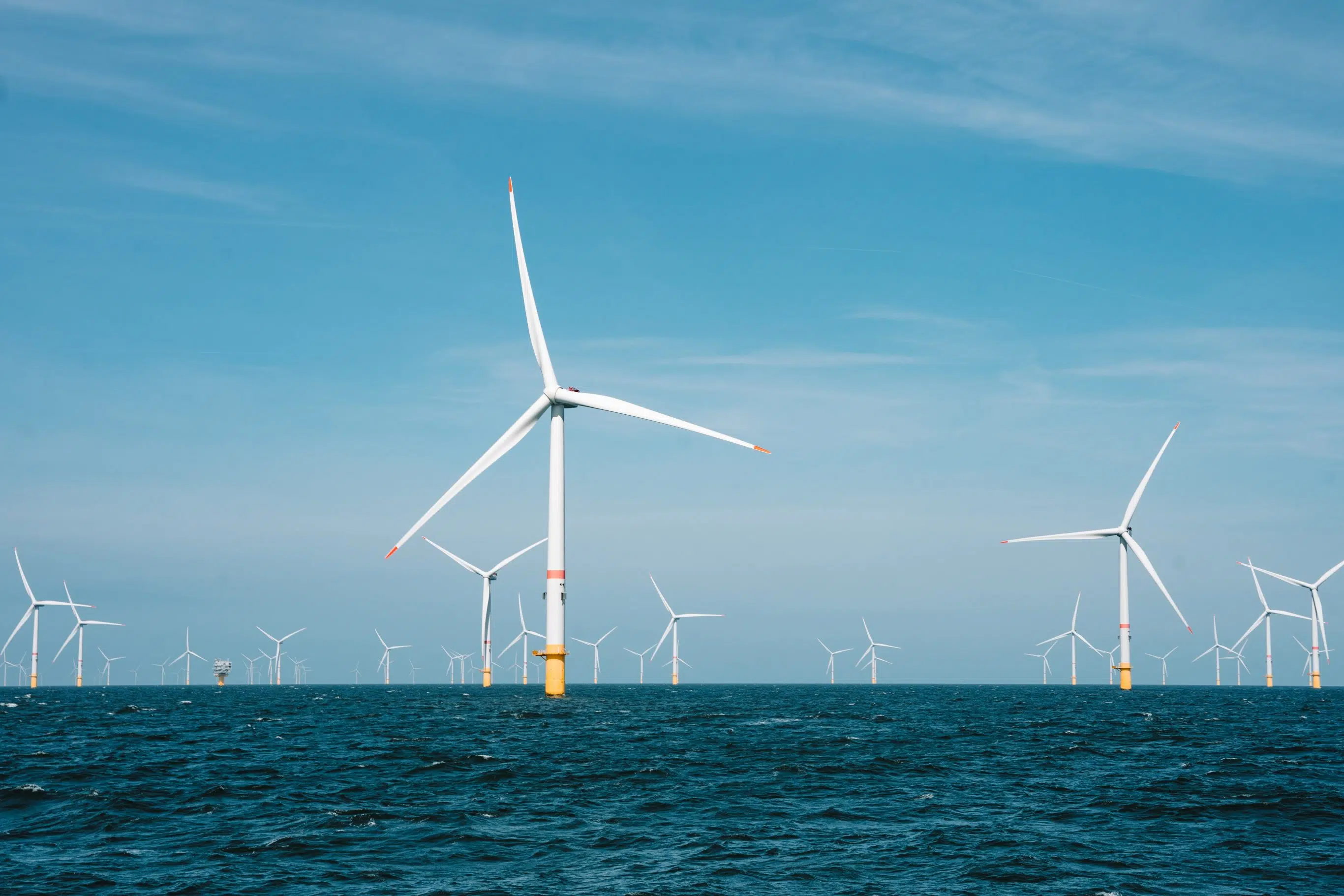
The province has introduced new laws that outline how offshore wind projects will be charged and regulated.
The Powering the Economy Act, along with the Offshore Renewable Energy Revenue Act, will set a fixed annual fee of $7,000 per megawatt of installed capacity for the first 10 years of commercial operation.
Officials told reporters during a media briefing that the figure is written directly into the Act to give industry clarity before the expected call for bids later this year. The amount reflects the fee already used for onshore wind projects, providing consistency across the sector.
After the first decade, projects will shift to a revenue‑based levy, calculated as a percentage of the total energy generated. That rate—expected to be around 4 per cent, based on current government modelling—will apply whenever it exceeds the fixed per‑megawatt charge.
The Act also authorizes two additional regulated fees tied to the bidding process: a $250,000 application fee refundable to unsuccessful bidders, and a $750,000 non‑refundable fee for successful bidders. Federal regulations have already been updated to support this revenue framework.
Officials say the revenue rules do not capture the broader economic benefits expected from offshore wind development, which include supply‑chain growth, port activity, workforce development, and long‑term job opportunities.
The province confirmed that the first five gigawatts of offshore wind are expected to be exported to international markets, since onshore wind remains cheaper for Nova Scotian’s.
The new laws will also replace the Petroleum Resources Act with a modernized Subsurface Energy Resources Act, expanding regulations to emerging sectors such as geothermal energy, natural hydrogen, helium, and carbon storage.
Officials noted there is already early‑stage exploration underway for natural hydrogen in Nova Scotia, and geothermal energy is already used in municipal buildings in Springhill.










Comments