
Doctors in Nova Scotia can now get additional retirement funding from the provincial government.
At a news conference Wednesday, the province unveiled a new initiative to boost retirement funds for physicians to retain and recruit more doctors to the province.
Premier Tim Houston said Nova Scotia doesn’t just have to compete with other provinces.
“We’re competing with the rest of the world, and our recruitment and retention efforts must reflect that,” he said.
He says this funding would be in addition to doctors’ existing retirement plans.
Doctors in the province are now eligible to apply for the money for the 2024 tax year if they’ve been paid for direct patient care between April 1, 2023, and March 31, 2024.
Funding is scaled based on how many hours the doctors have worked compared to fulltime equivalent hours.
The government will also match some payments up to a certain amount. For example, after working for more than 15 years, the government will match the doctors’ yearly contribution. The table below illustrates the funding breakdown by year.

The above table shows how much the government will top-up retirement funds per year based on how much a doctor contributes to their own fund. (Nova Scotia Government)
About 3000 doctors in total are eligible to apply this year.
The government says they think the new retirement fund will cost $22 million every year.
Between April and August, the province says they’ve recruited 73 new doctors in Nova Scotia.
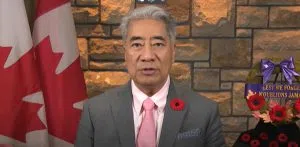
Dr. Gehad Gobran, the president of Doctors Nova Scotia spoke at the news conference this morning.
He thanked Houston for creating the new fund.
“We have been waiting for this for a long, long time, and you promised, and it has been fulfilled. So we really appreciated that,” he said.
“That will really help in hiring and retaining the physicians here in Nova Scotia.”
Gobran added that, before this, doctors didn’t have a government program to support them in retirement, so this helps.
Although, neither Houston nor Gobran could specifically site evidence that the retirement fund would help recruit and retain doctors, but they said they believe it will.
When a student finally graduates and can start working as a doctor, they need to pay a lot of money to cover the cost of their education, and they aren’t as focused on saving money for retirement, said Gobran.
Houston said most people appreciate additional compensation and seeing that the government respects their profession.
“I’m pretty sure it’s not going to drive doctors away,” he said.









Comments