A drastic measure to put an end to the protests over COVID-19 measures.
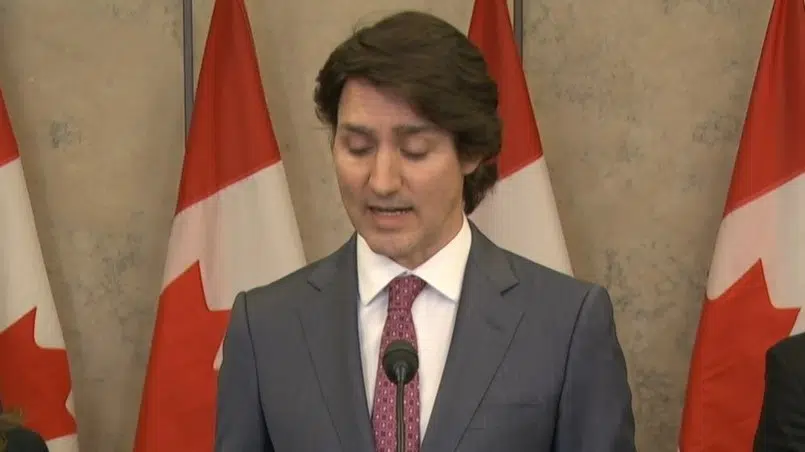
Prime Minister Justin Trudeau is invoking the Emergencies Act for the first time in Canadian history.
“The illegal blockades have been disrupting the lives of too many Canadians,” Trudeau stated during Monday’s announcement. “Here in our capital city, families and small businesses have been enduring illegal obstruction of their neighbourhoods. Occupying streets, harassing people, and breaking the law – this is not a peaceful protest.”
Trudeau says discussions were held with cabinet members, Canada’s premiers, and opposition leaders before making the decision.
The act grants the Federal government additional powers to assist with the handling of the protests that have been happening across Canada.
Trudeau says it gives the power to ban public gatherings in targeted areas and issue fines and jail time. He explains local police still have jurisdiction along with access to RCMP resources. The military will not be brought in to help.
The act also includes significant financial powers. Companies with trucks at blockades could see their corporate accounts frozen and banks can suspend personal accounts.
Interim Conservative Leader Candice Bergen says they want to see a peaceful and swift end to the protests, but they don’t know if invoking the Emergencies Act is the right path.
“At first blush, we are very concerned with what we see,” Bergen says. “If you look across the country, provinces are not in agreement with what the prime minister is proposing. He has said he has consulted, but they’re really isn’t collaboration or agreement. Alberta is opposed to it, Saskatchewan, Manitoba, and Quebec.”
She says more discussions will take place amongst party members to determine whether or not they will support the invoking of the Emergencies Act.
Originally, the War Measures Act was in its place until the 1980’s. It was defined to be used during a national emergency that was considered temporary.
The Prime Minister is able to use this act in scenarios where there is public welfare at risk such as natural disasters, disease, public order disturbances as well as international and war emergencies.
**With files from Skye Bryden-Blom.